A CRM is not better simply because it is custom
As a development company, it would be easy to claim that every business needs its own CRM. That would not be professionally honest. Many organisations achieve the best value with a well-configured existing product. In other situations, an off-the-shelf platform creates constant workarounds, manual activity and integration limits.
The decision should focus on how standard the process is, how critical the system is and whether custom operation creates meaningful business value.
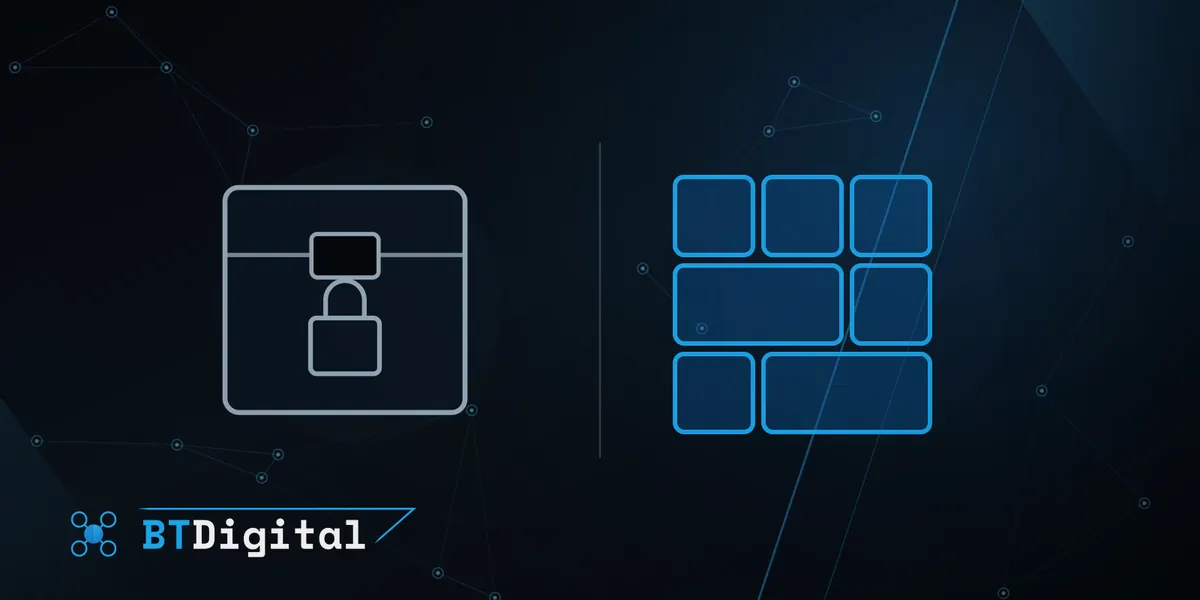
Off-the-shelf CRM
An off-the-shelf CRM is a shared product used by many customers, typically provided through a subscription. It can usually be configured with fields, workflows and integrations.
Advantages: faster launch, ready-made core features, established documentation, existing integrations, managed infrastructure and lower initial delivery risk.
Trade-offs: recurring per-user or package fees, limited customisation, possible vendor lock-in, complex user interfaces, export constraints and additional work for specialised integrations.
Custom CRM
A custom CRM is designed around the organisation’s own workflows, roles and data model. It may be built from the ground up or created as a tailored business application using proven components.
Advantages: close fit with real processes, relevant features only, custom permissions, deep integration, consistent terminology, better control over product direction and the opportunity to turn a strategic process into a competitive advantage.
Trade-offs: higher initial investment, longer planning and delivery, greater dependence on specification quality, continuous operational responsibility and the need to prioritise every feature.
Compare total cost, not only the first month
A subscription may begin at a low level but increase with user count, advanced plans, automation, storage and integrations. A custom solution requires more initial investment but does not necessarily use per-user pricing.
Include implementation, licences, integrations, migration, training, operations, changes, exit costs, manual workarounds and downtime risk in the comparison. The useful question is which option creates the best value over three to five years.
Key decision criteria
- How standard is the process? A conventional sales pipeline may fit an existing product. Special approvals, technical data or custom pricing may justify a tailored system.
- What creates competitive advantage? Do not custom-build processes that are identical everywhere. Invest where the workflow differentiates the business.
- Which integrations are required? ERP, ecommerce, stock, billing and production connections may be decisive.
- Who will operate the system? A SaaS vendor manages the platform, while the business still owns configuration and data quality. A custom system requires a delivery and operations partner.
- How portable is the data? Review export formats and termination conditions before signing.
The hybrid option
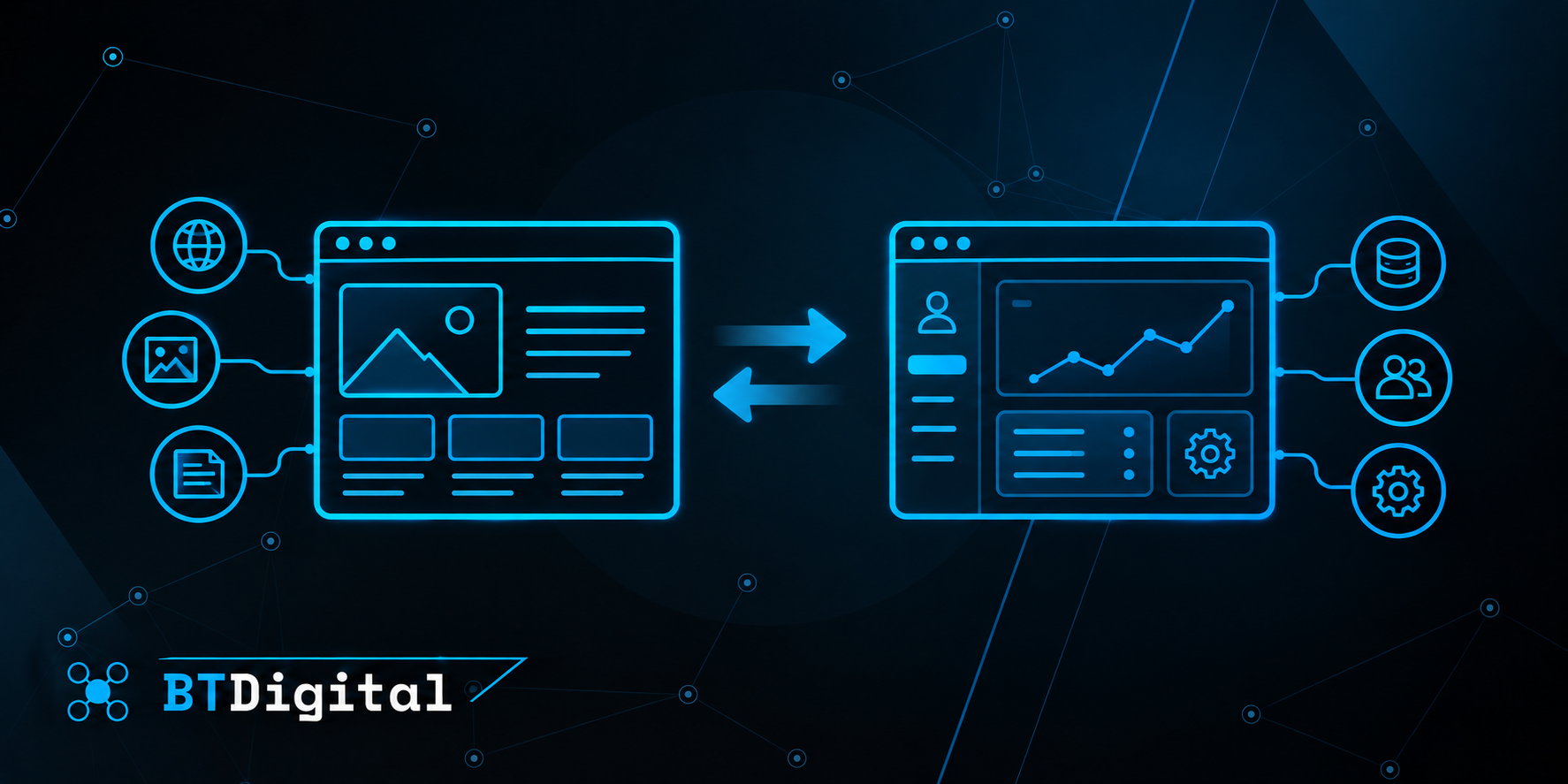
The decision is not always binary. A strong architecture may use an established CRM for standard functions, custom connectors for ERP and billing, a tailored customer portal, an automation layer and separate reporting.
The BT Digital perspective
We do not recommend custom development merely for ownership. We begin with the process, growth plan, integrations and total cost. If an existing product fits, it should be implemented well. If it consistently limits strategic operations, a custom CRM or dedicated business module may be justified.
The right question is not simply “off-the-shelf or custom?”. It is where standardisation is efficient and where customisation creates real value.