Hosting is not the same as operations
A business website, webshop, web application, backend or mobile app runs in a changing environment. Operating systems, dependencies, browsers, mobile platforms and external APIs evolve. Traffic changes, certificates expire, disks fill and third-party services fail.
Operations ensure that the system does not merely launch, but remains observable, recoverable and controlled.
What monthly operations may include
Infrastructure and hosting
Management of VPS or cloud resources, web servers, databases, DNS, TLS certificates, storage, email services and staging/production environments. External provider charges may remain separate from the service fee.
Monitoring
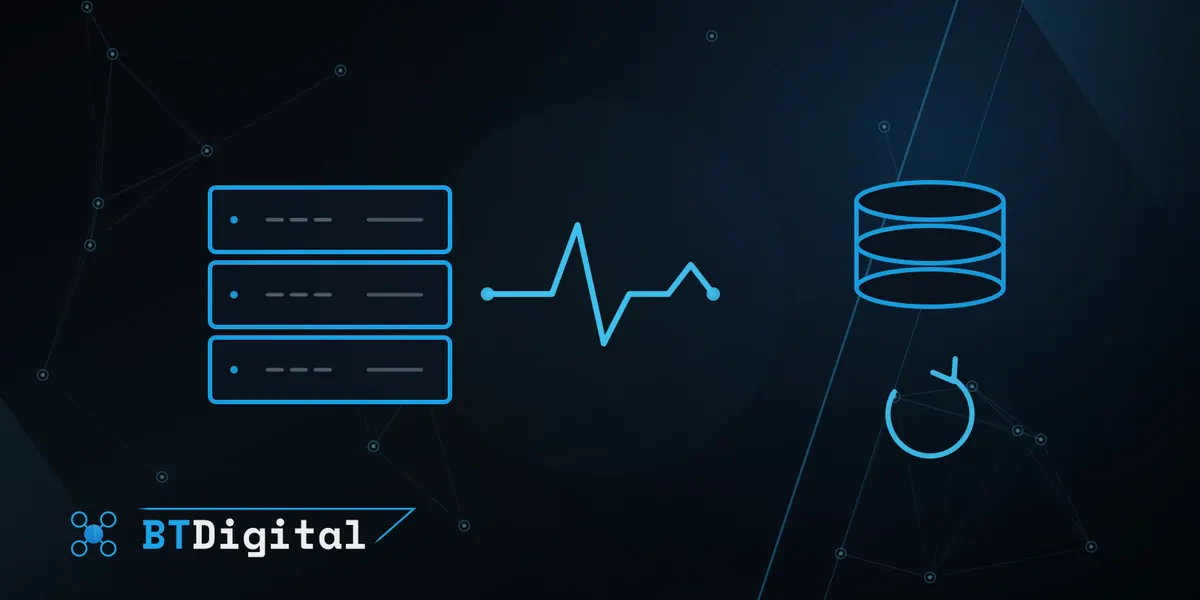
Monitoring can check website availability, API health, background jobs, error rates, resources, databases, certificate expiry, backup success and unusual security activity. Monitoring creates value only when alerts lead to a defined response process.
Backups and restoration
A reliable backup policy defines what is protected, frequency, retention, storage location, encryption, access and the restoration process. A backup is only trustworthy when restoration has been tested.
Updates and dependencies
Safe updates usually require review, staging tests, compatibility checks, a rollback plan, deployment and post-release verification. Updating everything immediately in production is not a professional maintenance strategy.
Defect handling and support
A defect is not the same as a change request or a new feature. A monthly package may include defect support and minor technical work, but should not imply unlimited feature development.
Security activities
Depending on the system: access reviews, 2FA, security updates, log review, secret management, rate limiting, spam protection and vulnerability notices. Operations provide daily security hygiene but do not replace every form of penetration testing.
Mobile-app activities
Mobile applications also require Android and iOS compatibility work, build signing, certificates, store requirements, release publication, crash analysis and push-service checks.
Reporting and capacity planning
A monthly report may cover availability, incidents, updates, backup status, resource use, open risks and recommended improvements.
What may be excluded?
Large new features, redesigns, major migration, third-party usage charges, SMS or AI consumption, domain fees, 24/7 on-call support and emergency work outside the contracted window are commonly priced separately. A transparent agreement states these boundaries in advance.
What determines the monthly fee?
Complexity, user volume, data sensitivity, integrations, required response time, support hours, monitoring depth, included engineering capacity and business criticality all matter. A brochure website and a revenue-critical customer portal carry different responsibilities.
The BT Digital approach
We do not treat operations as an arbitrary extra. Its purpose is to prevent avoidable incidents and handle unavoidable ones quickly and transparently.
A good operational model always answers three questions:
- How do we know that something is wrong?
- How can operation be restored?
- Who starts handling the incident and within what time?
The value of a digital system is proven through reliable everyday operation, not only on the handover date.