A CRM is not an expensive address book
Many businesses initially manage leads through email, phone calls, notes and spreadsheets. This can work well for a period. The problem starts when information no longer fits within one person’s memory or one file, and growth becomes limited by a lack of visibility.
CRM stands for Customer Relationship Management. It provides a shared place for leads, customers, contacts, communication history, quotations, tasks and sales stages. The goal is not to create more administration. A good CRM ensures that opportunities are not forgotten and the next action is always visible.
Eight signs that it may be time for a CRM
- Leads are being lost. Enquiries arrive, but there is no owner or follow-up deadline.
- Customer data is scattered. Information lives in phones, inboxes, spreadsheets and documents.
- The sales pipeline is unclear. Management cannot quickly see open opportunities and their stages.
- Follow-ups are missed. The process depends on individual memory.
- The same data is entered repeatedly. Customer information is copied into quotations, billing and project tools.
- Customers are difficult to hand over. Colleagues cannot see history, promises and next actions.
- Lead sources cannot be compared. The business does not know which channels create valuable opportunities.
- The team is growing. Shared working methods become necessary as more people interact with customers.
What should an initial CRM manage?
A first CRM for an SME does not need to cover the entire organisation. The usual priorities are:
- companies and contacts;
- leads and acquisition sources;
- opportunities and pipeline stages;
- tasks and reminders;
- communication history;
- quotation value and status;
- responsible team member;
- basic reports;
- roles and permissions.
Email sync, billing, automation, customer portals, marketing or ERP integration can follow later.
When is a spreadsheet still enough?
A spreadsheet may remain sufficient when enquiry volume is low, one person manages sales, the process is simple, data changes infrequently and manual reporting is quick. A CRM is not required merely to appear modern. It becomes worthwhile when the cost of lost opportunities and manual coordination exceeds the cost of implementation and use.
The real challenge is often process, not software
If team members use different meanings for “qualified lead” or “quotation sent”, software will only digitise the ambiguity. Before implementation, define how a lead enters the process, when it becomes relevant, which stages it moves through, who owns the next action, when it is closed and which information is mandatory.
Off-the-shelf or custom?
An off-the-shelf CRM can be deployed quickly and may include many integrations. A custom CRM becomes relevant when the workflow differs significantly from a standard sales process, specialised permissions or integrations are required, or the CRM is part of a broader business platform. A hybrid approach is often ideal: a proven foundation with custom integrations and automation.
What business value can a CRM create?
A well-implemented CRM can reduce lost leads, standardise follow-up, improve handovers, make future sales more visible, identify bottlenecks, accelerate quotations and provide better management information.
A practical implementation path
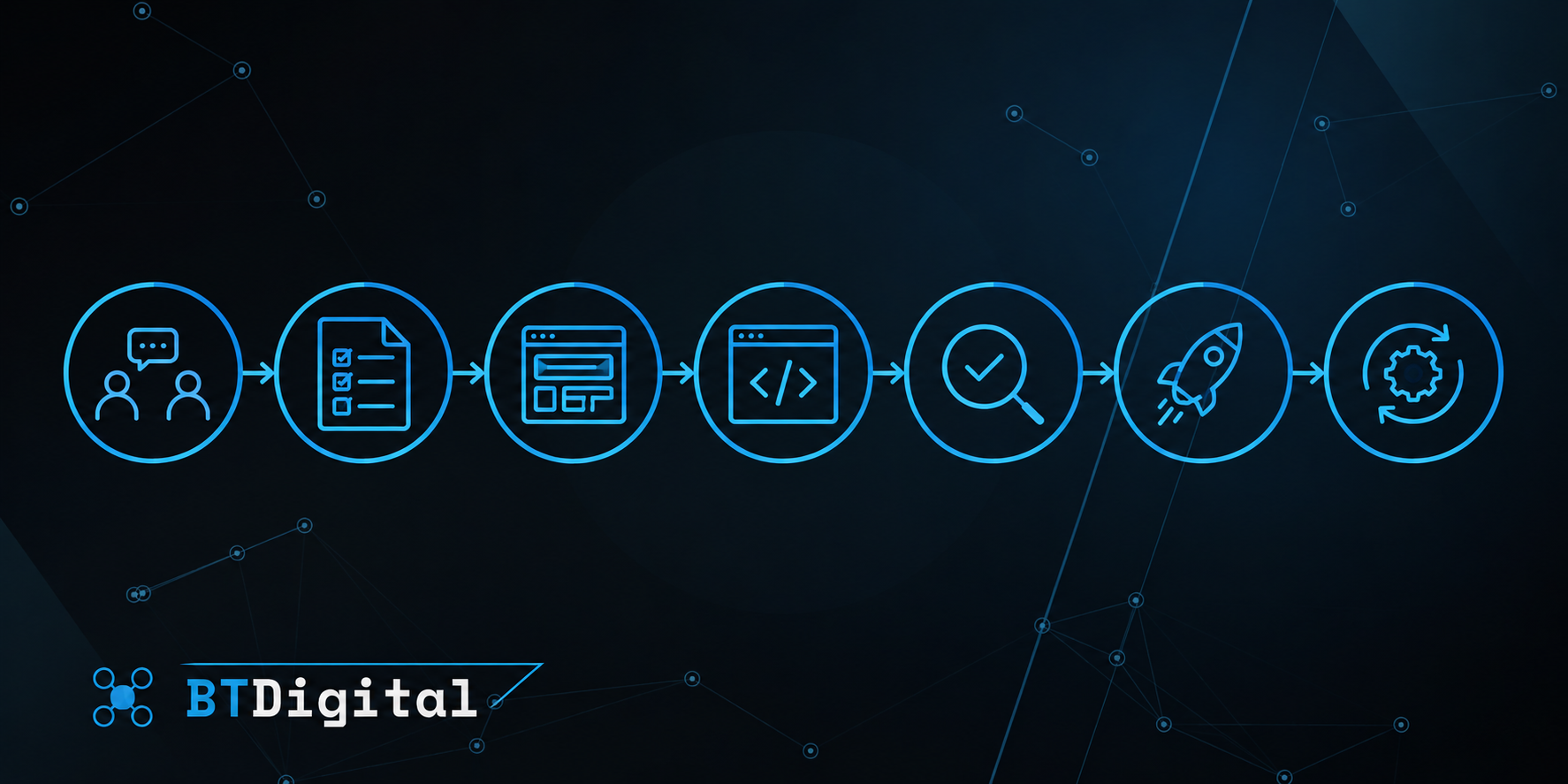
- Map the real workflow.
- Define a small MVP scope.
- Clean and deduplicate existing data.
- Pilot the system with a smaller team.
- Train users and define data-entry rules.
- Measure adoption and improve the workflow.
The BT Digital perspective
A CRM project succeeds when it makes customer acquisition and collaboration more transparent. It is not simply the installation of software. Not every company needs a custom platform immediately, and not every feature is needed on day one.
The best first step is a short process assessment: where does information disappear, where are follow-ups missed and which decisions lack reliable data?
When spreadsheets, email and individual memory can no longer keep pace with the business, it is time to consider CRM.