ERP is not simply a larger CRM
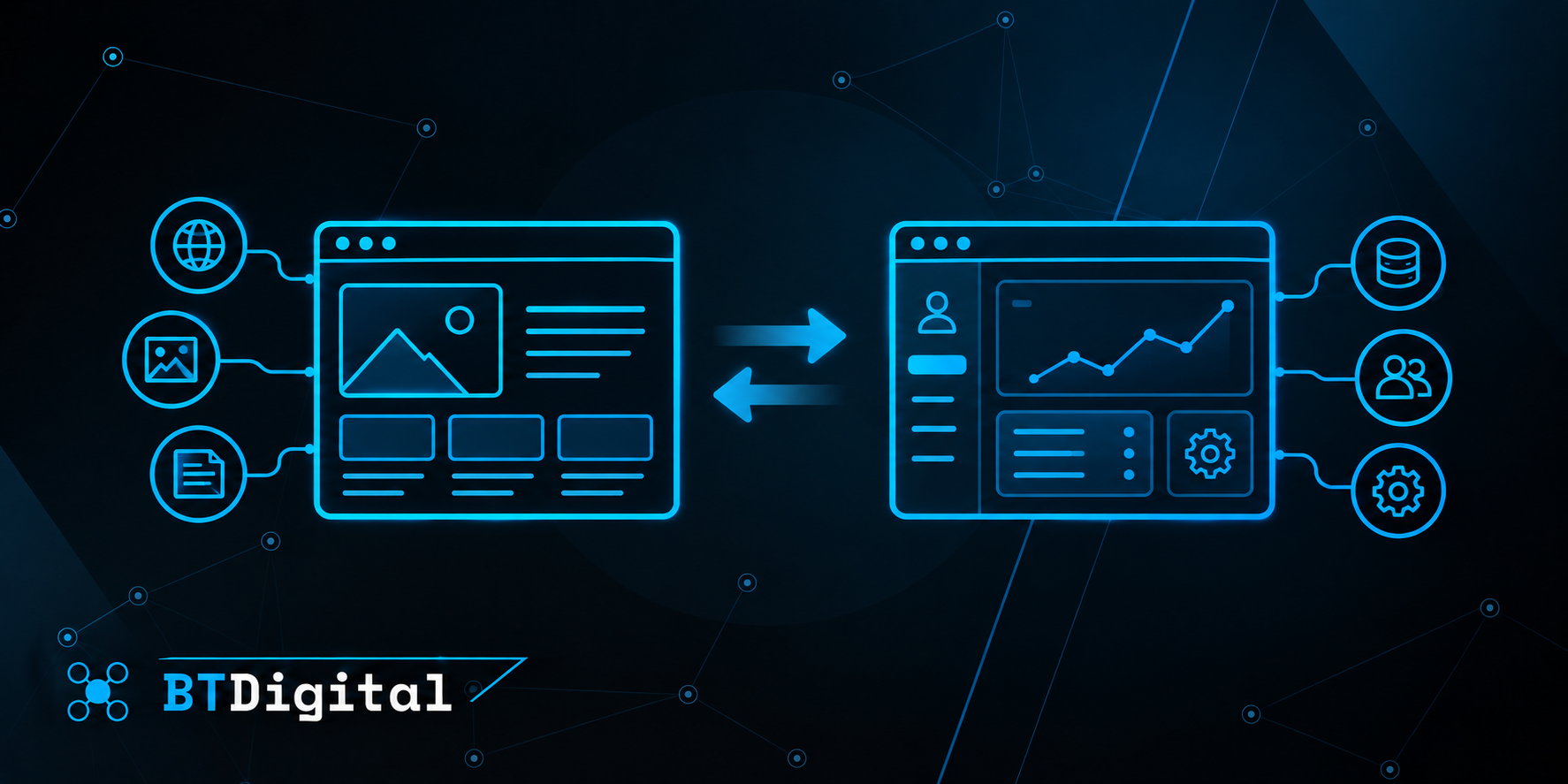
CRM focuses primarily on leads, customers and sales. ERP - Enterprise Resource Planning - connects internal resources and transactions such as products, inventory, purchasing, orders, delivery, projects, time, approval and reporting.
It does not always include statutory accounting or payroll. Those functions may remain in specialised systems connected to the ERP.
When are separate tools still sufficient?
An early-stage SME may work effectively with billing, ecommerce, spreadsheets and project management tools. ERP becomes relevant when manual data movement and inconsistent information create significant cost or risk.
Signs that ERP may be justified
- inconsistent product master data;
- unreliable stock levels;
- repeated manual data entry;
- no end-to-end order visibility;
- difficult purchasing planning;
- slow management reporting;
- multiple warehouses or locations;
- growing error cost;
- approval workflows handled through email;
- many fragile scripts and exports.
The foundation is master data
Products, item codes, units, prices, tax rates, partners, warehouses, suppliers, projects, cost centres and permissions must be controlled. Migrating poor data simply enables the ERP to produce poor results faster and at larger scale.
Off-the-shelf, customised or custom core?
A standard ERP works when operations follow a common industry model. A customised platform is often ideal for SMEs: proven modules plus configuration, reports and selected integrations. A custom ERP core is justified only when special operations create strategic value or standard systems consistently block the business.
Introduce it in stages
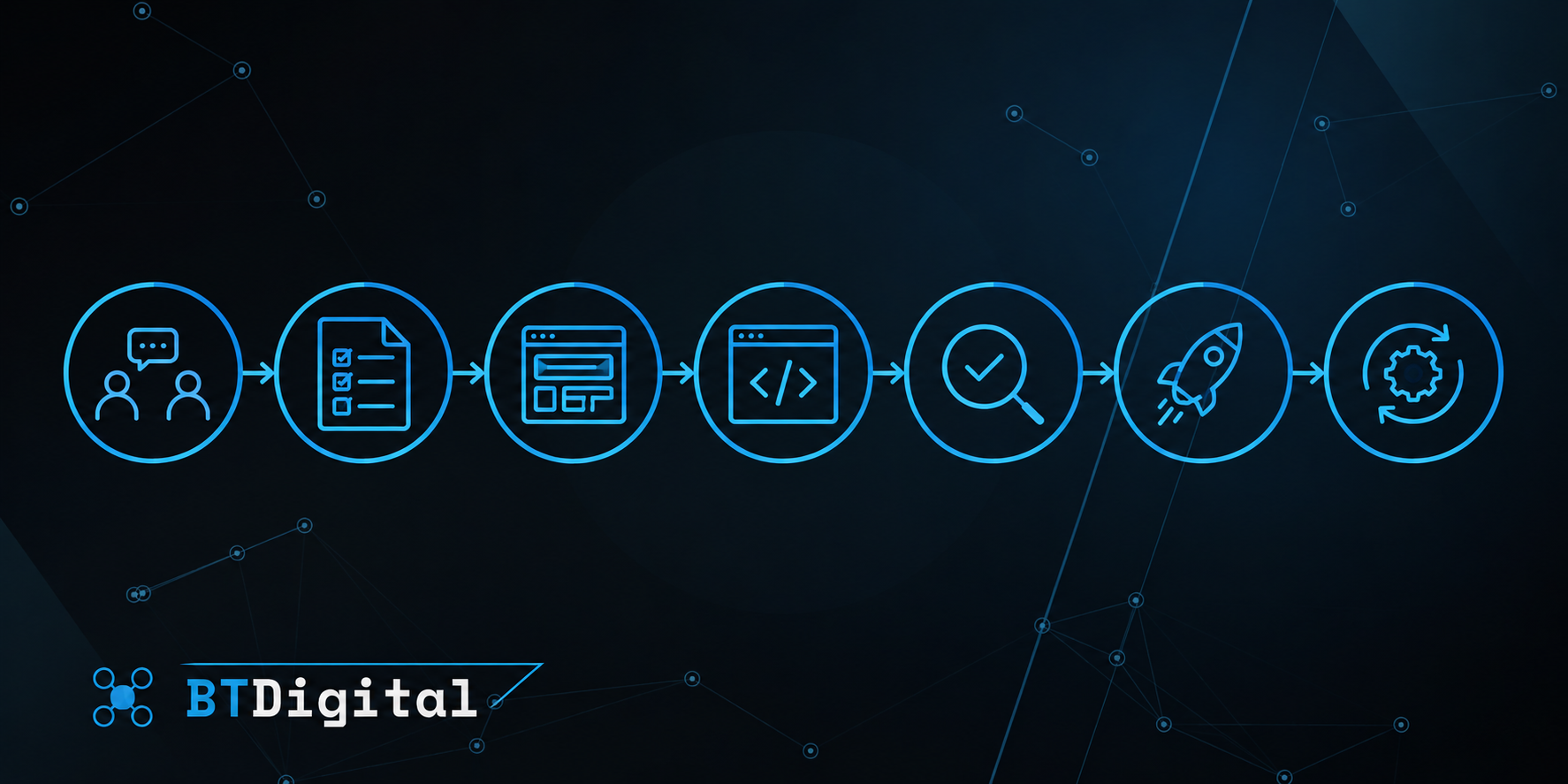
A practical roadmap may start with master data and orders, then inventory, purchasing, billing/ecommerce integration, project and cost management, followed by management reporting.
Key implementation risks
Avoid an oversized first scope, digitising a broken process without improvement, unclear data ownership, missing user involvement, parallel spreadsheets that create multiple truths and integrations without retry and reconciliation logic.
What should be measured?
Manual entry time, inventory variance, order lead time, fulfilment errors, urgent purchasing, reporting time, user adoption, integration errors and product or project profitability.
The BT Digital approach
For SMEs, we prefer a modular roadmap over a high-risk big-bang replacement whenever possible. We map data flow and the most expensive manual loss first, then deliver stages that create standalone value.
ERP becomes worthwhile when the value of shared data and coordinated processes exceeds the apparent simplicity of disconnected tools.