Technology is a tool, not the objective
Digital projects often start with a preselected solution: “we need a mobile app”, “we need a new website” or “we want a customer portal”. From an engineering perspective, the first question should be different: what business problem are we solving, who will use the solution, how often and in what environment?
At BT Digital, we do not recommend a mobile app for every idea. A well-structured website is often the most economical option. In other cases, the business needs to manage data and workflows, which calls for a web application. A mobile app becomes valuable when repeated use, notifications or device capabilities create a clear advantage.
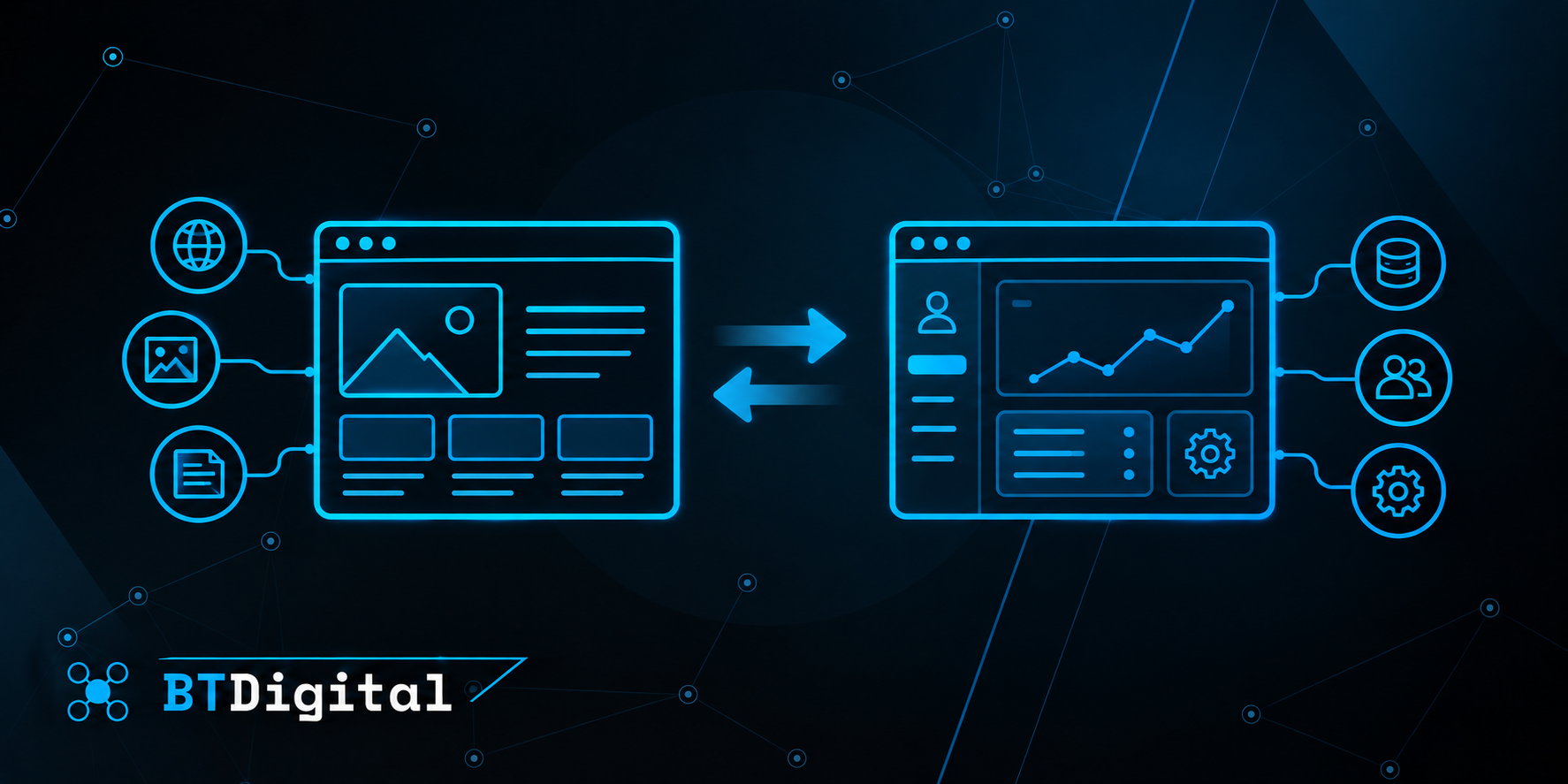
What is a website?
A website mainly communicates information, builds trust and supports lead generation. It can present a company, services, products, references and contact options.
Typical examples include:
- corporate websites;
- service websites;
- product catalogues;
- campaign landing pages;
- blogs and knowledge bases;
- contact and quotation request pages.
A modern website may still have an administration area, multiple languages, search, a catalogue or forms. The key distinction is that users primarily consume content and perform only limited actions.
When is it the right choice?
Choose a website when visibility, credibility and lead generation are the main goals. For an early-stage business, it is often the best first step because the market message can be tested quickly and with lower risk.
What is a web application?
A web application is software used through a browser. It does not simply display information: it manages workflows, changes data, applies permissions, performs calculations and connects to other systems.
Examples include:
- CRM and ERP systems;
- booking and order management;
- customer portals;
- internal administration systems;
- stock and inventory management;
- quotation builders;
- dashboards and reporting tools;
- SaaS platforms.
A web application requires careful decisions about data models, roles, permissions, auditability, integrations, testing and operations. It is not just a collection of screens; the underlying system must handle business data reliably.
When is it the right choice?
A web application is appropriate when users sign in, enter or modify data, manage statuses, upload documents, initiate workflows or collaborate in a shared system. It is centrally updated and accessible without installing software.
What is a mobile application?
A mobile app is installed on an Android or iOS device. Its value is not the mere presence in an app store, but its ability to become part of the user’s regular routine.
Strong reasons for building one include:
- frequent or daily usage;
- push notifications;
- camera, location, biometrics or other device functions;
- partial offline operation;
- a mobile experience that is critical to the service;
- a retention channel for returning customers.
When should you avoid building an app?
If customers use the service once a year, device features are unnecessary and a mobile-friendly web page handles the process well, a separate app may become an avoidable expense. It also introduces store accounts, publishing, version management and platform compatibility work.
Quick decision table
| Business need | Likely solution |
|---|---|
| Company presentation and lead generation | Website |
| Login, data and workflow management | Web application |
| Frequent mobile use, push, camera or GPS | Mobile application |
| Internal system for multiple employees | Web application |
| Testing a new offer quickly | Landing page or website |
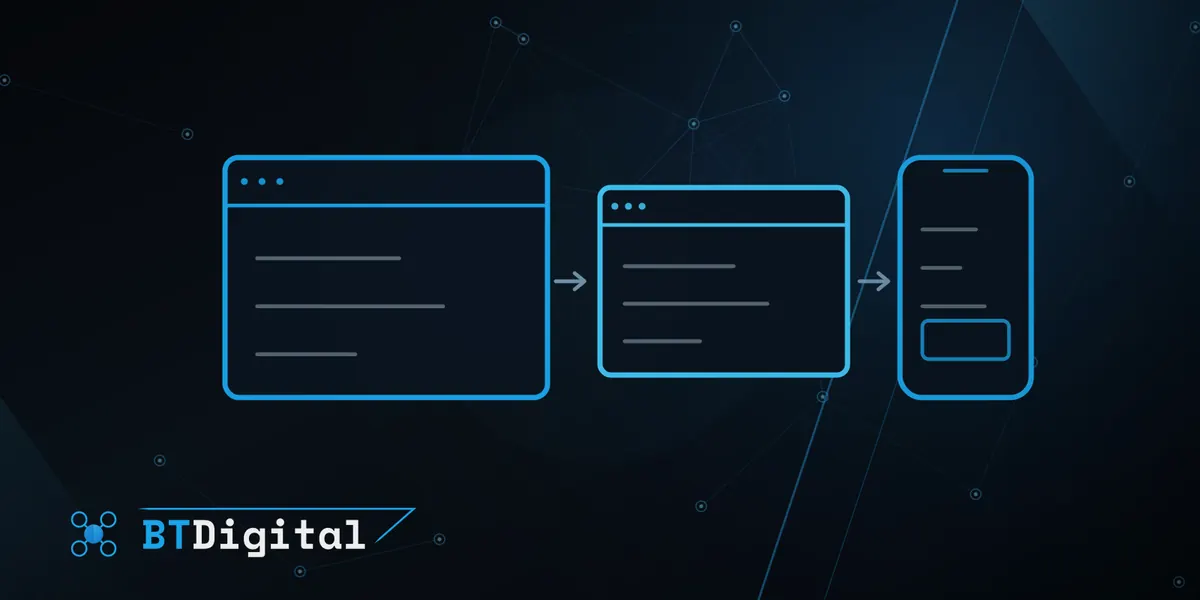
| Customer portal on desktop and mobile | Responsive web application, optional app later |
A combination is often the best answer
A larger digital product may include a public website, an internal or customer-facing web application, a backend API and a mobile app. These components do not all have to be delivered in the first release. An MVP should test the most important business assumption. A responsive web application may be the right starting point, followed by a mobile app only after usage data supports it.
What drives development cost?
The label “website” or “app” does not determine cost on its own. The main drivers are:
- the number of workflows and features;
- custom design and components;
- backend, database and administration;
- roles and permissions;
- third-party integrations;
- data import and migration;
- payments, billing, maps and notifications;
- testing and security requirements;
- documentation and training;
- operations and SLA commitments.
The cheapest initial build is not always the lowest-cost solution over time. A rushed system may become expensive if it is difficult to change, poorly tested or requires repeated rebuilding.
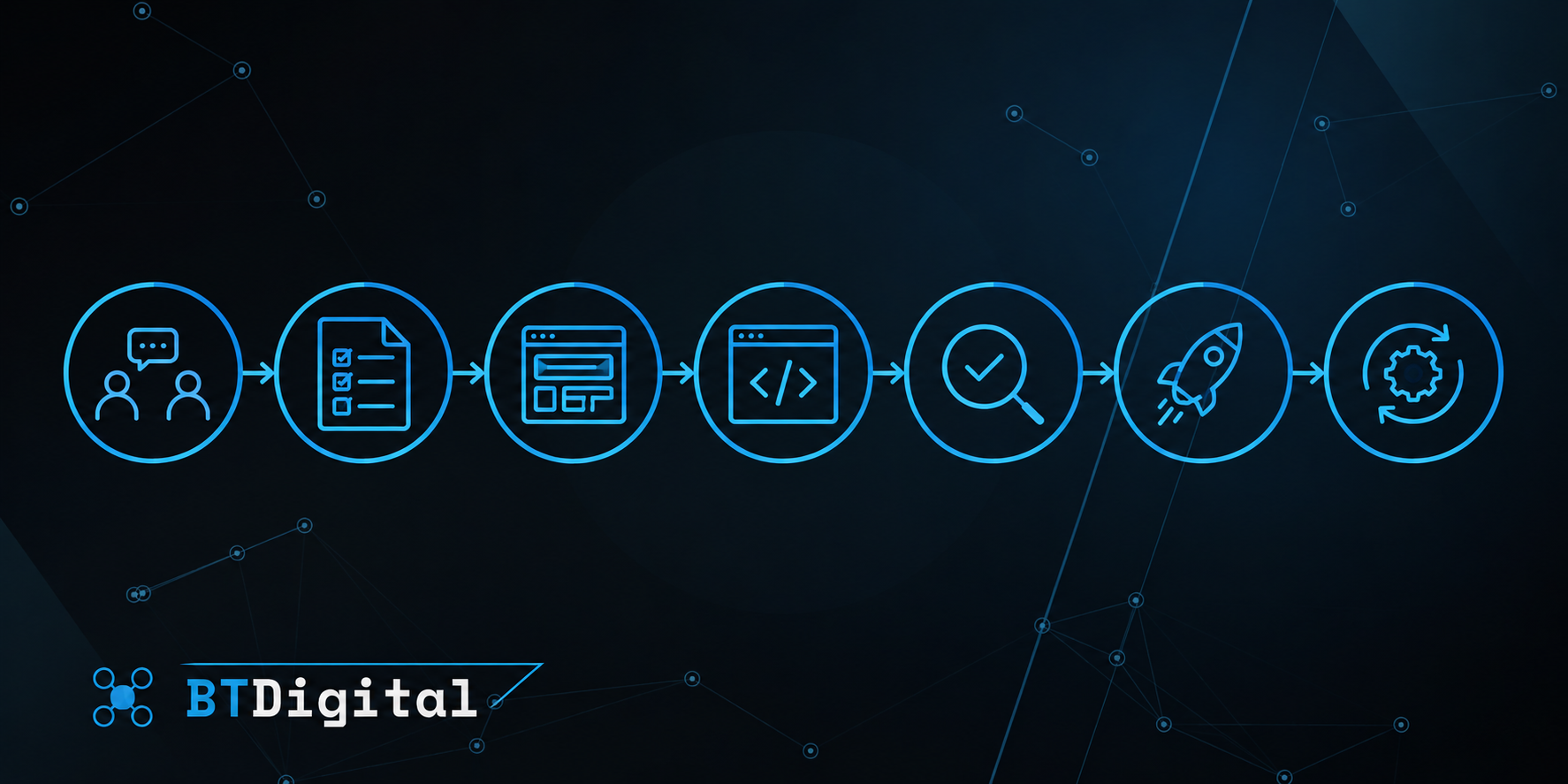
The BT Digital approach
We begin with the business objective, user situations and existing processes. We then recommend the smallest solution that creates real value without blocking future growth.
A good decision is not about choosing the largest possible system. It is about matching the technology to the problem, expected usage and the current maturity of the business.
Five questions before you decide
- What must the user be able to complete?
- How often will the solution be used?
- Does it require login and personal data?
- Are mobile device capabilities necessary?
- What is the smallest version that can validate the business idea?
Summary
A website communicates and generates demand. A web application manages data and workflows. A mobile app is justified when repeated mobile use or device capabilities provide measurable value.
Not sure which direction fits your project? Describe the business goal, audience and desired process. BT Digital can help select a technical approach that is not only buildable, but also maintainable over the long term.